
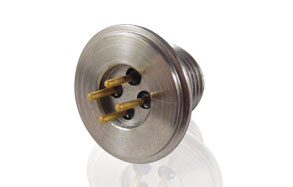
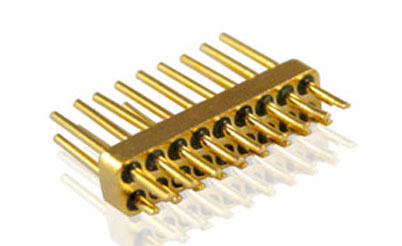
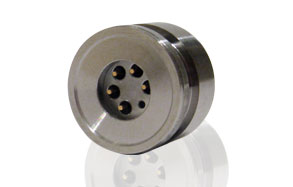
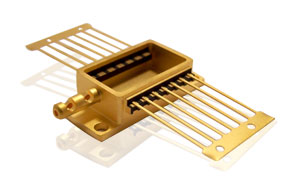

Car manufacturers are increasingly high requirements of its supply base, which is already a well-known supplier of auto parts. Connector suppliers, which means that more stringent requirements for product performance, stability and cost. The supplier only innovation in products and processes to meet these needs of customers, in order to in a dominant position.
A typical light vehicle about 1500 connection points, of which 50% to 60% for key distribution function. The Hermetic Connectors is used for the deteriorating environment, including temperature (as low as minus 40 ° C, up to zero at 155 ° C), vibration, oxidation, corrosion and friction, we began to realize the importance of design research.
Actually the thing to do is not simple, most people troubled frustrated most commercial electronic components fails, but if the key Auto Parts and connected problems, it will cause a fire alarm, the failure of the brakes or airbags lead to serious consequences.
Vacuum Connector manufacturers must identify and analyze the environment that may impact on the physical and mechanical phenomena connector performance. In accordance with the vehicle manufacturer's specified application conditions, in order to assess the stability of the connector, the connector manufacturer implementation of sophisticated testing procedures. If there is a connection failure, most of them can be identified as one of the following three failure modes: fretting corrosion, electrical failure and connector plug problem.
Fretting corrosion and plating
Corrosive gases, high humidity and strong oscillation is caused by oxidation and fretting corrosion and lead to the three conditions of the connector failure. These environmental factors interested in tin and tin-lead contact surface a great impact on 90% of the connector surface is in this case.
Often, people plating of precious metals, such as gold or silver, because these metal oxidation does not occur. Coating thickness ranged from 0.5 to 1.27μm. However, it is regrettable that contains these precious metals as well as their processing makes the plating process such expensive, so people as little as possible with this kind of plating material. In the automotive electrical wiring harness applications, only about 10% of the connection point of these metals.
As a result, some of the major suppliers of connector, such as FCI other options for plating solutions (such as pure tin plating, tin - Teflon TinTeflon, NXT and lamination technology), not only to meet the OEM cost requirements, and the product having the same performance.
Great deal of attention, from the the telecommunications market lamination terminal (connector to the circuit board) must comply with the high standards of the automotive specifications. Due to the Automotive PCB than thin PCB used in the telecommunications industry, the operating temperature (125oC) should be much higher and the use of environment vibration, this technology into the automotive systems is not an easy thing.
This technology brings significant process cost-effective, it will be a solder pin is press-fitted into the hole of the metal PCB board. Applies strict automotive applications, FCI lamination terminal has been specially design to provide the PCB is inserted fully controllable intensity, resistance and deformation to a minimum to ensure a strong PCB interface.
More cost-effective than the wave soldering, coupled with the process fully automated, reducing the cost of PCB FCI butterfly solutions (and associated tools) more and more car manufacturers favor. In addition to superior performance (compatible with SMT process excellence to maintain the integrity of the components), since there is no risk of the PCB thermal shock and solder bridging, it also improves the additional process quality.
In addition, FCI: the application of the nip under the correct conditions of the plating process and pin when the contacts are subject to a variety of external conditions constraints (e.g.: a sudden temperature change, changes in relative humidity in a dry environment for a long time and gas corrosion ), contact resistance has been kept small changes.




