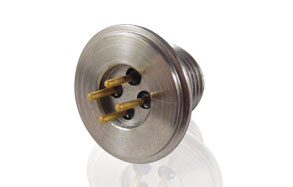
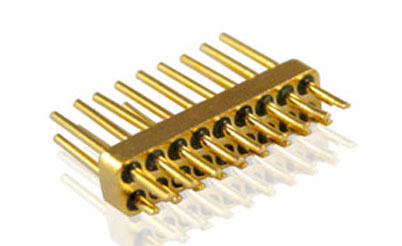
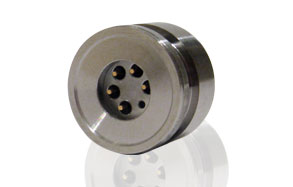
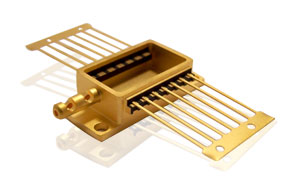
Ceramic metal and welding technology is the development and application of metal-ceramic material point
Metallized ceramic applications: ceramic and metal welding technology and methods
In industrial processing, the cutting blade and the cutting tool shank connection in two ways: welding and machine clip. Tool inserts and shanks connected directly affects tool life. Song Liqiu other laboratory studies: selection of inserts and shanks welded connections, the tool durability; optional clip-on unit, the tool life is low. Since Ti (C, N) cermets are brittle materials, high melting point than the metal, its linear expansion coefficient difference between the larger and metal, making Ti (C, N) cermet blade and shank joint after welding residual stress high, combined with poor compatibility with the metal, the metal ceramic and metal poor welding, the welding methods and processes generally difficult to obtain a satisfactory welded joint, Currently, the use of brazing and diffusion bonding metal ceramic and metal the connection has been successful. With the deepening of the study, there was a lot of new methods and techniques, the following describes the various applicable in metal-ceramic and metal welding technology and methods at the same time, point out its advantages and disadvantages, and research directions.
A fusion welding
Fusion welding is the most widely used welding method, the method using a heat source, the connecting parts of the local melted into a liquid, and then cooling and crystallization into one. Arc welding heat source, a laser beam and the electron beam. Currently Ti (C, N) cermet fusion welding mainly in the following two problems to be solved: First, with the melting temperature, the flow is reduced, it is possible to promote between the matrix and the reinforcing phase chemical reactions (interfacial reaction) occurrence, reducing the strength of welded joints; Another problem is the lack of specially developed
Ceramic metallization fusion welding filler material.
A) arc welding
Fusion welding arc is currently the most widely used a welding method. The advantage is flexible, convenient, applicability, and simple equipment. However, this method of welding the ceramic and metal matrix and can easily cause a chemical reaction between the reinforcement (interface reaction). Since Ti (C, N) cermet has conductivity can be soldered directly on the Ti (C, N) cermet and metal arc welding experiment studies show that it is feasible, but need to be addressed such as interfacial reactions, welding defects ( cracks, etc.) and the welded joint strength is poor.
2) laser welding
Laser welding is a special and difficult to weld an important welding materials welding method. As the laser beam energy density, therefore having deep penetration laser welding, weld width small heat affected zone is small, lower weldment after welding residual stress and deformation characteristics, capable of producing stable at high temperature connectors, you can on the quality of welding products for precise control. Laser welding technology has been successfully applied to a vacuum sintering powder metallurgy materials. According to reports, Mittweida Laser Application Center has developed a dual laser beam welding method. It uses two laser beams work, a laser bear workpiece preheating, another laser beam for welding. With this dual laser beam welding method can achieve a variety of connection geometry, and will not reduce the strength of raw materials and high temperature performance, welding time is only a few minutes. This method can effectively prevent the heat-affected zone during welding cracks for Ti (C, N) cermet and metal welding, but the fixture, with the precision and preparation before welding require a higher investment in expensive equipment , higher operating costs, need to further improve its process reproducibility and reliability.
3) electron beam welding
Electron beam welding is a high-energy density electron beam welding member to local heating and melting method and welded together. Vacuum electron beam welding is a welding of metal
Ceramic PCB and metal effective welding method, which has many advantages, because it is under vacuum, to prevent air, oxygen, nitrogen and other pollution; electron beam focus can be formed by very small diameter, can be as small Φ0.1 ~ 1.0mm range, the power density can be increased to 107 ~ 109W/cm2. Therefore, electron beam welding with heating area is small, weld width is small, deep penetration welding heat affected zone is small. But this approach is that device complexity, more stringent requirements for the welding process, the production cost is higher. Currently for Ti (C, N) cermet and metal electron beam welding technology is still in the experimental stage.
2 Brazing
Brazing is heating the material to an appropriate temperature, while the application of the material will produce the solder with a soldering method. Brazing method is usually heated by a heat source or method of classification. Currently has industrial application brazing methods are: (1) flame brazing; (2) furnace brazing; (3) induction brazing; (4) resistance brazing; (5) impregnated brazing; (6) Infrared brazing. Brazing is Ti (C, N) cermet and metal connecting a major welding method, brazed appropriate choice depends on the quality of solder and brazing processes. Li Xianfen other on Ti (C, N) cermet and 45 steel using copper, silver-based solder were carried out in flame brazing tests and argon furnace brazing tests. Flame brazing conditions, using H62 for the solder joint, the average shear strength of 37MPa, to BAg10CuZn the solder joint shear strength of 114MPa, to BCuZnMn solder joint in the average shear strength of 49MPa; in argon welding conditions furnace to H62 as the solder joint, the average shear strength of 37MPa, to the solder joint Ag72Cu28 average shear strength of 51MPa. Through observation and analysis of the binding of brazed joints and shear tests, indicating that Ti (C, N) cermet has good solderability. However, at the joint interface cermet residual stress, resulting in the shear tests were broken on the cermet, and the shear strength of brazed joints is not high. Zhang Lixia and other implements used AgCuZn brazing TiC cermet and cast iron brazing. In recent years, the use of amorphous technology also successfully developed a new titanium-containing system, such as Cu Ti, Ni Ti alloy, can be directly used for brazing ceramics and metal, its joint operating temperature than the silver-copper brazing filler metal to be much higher. Currently, metal-ceramic brazed to reduce or eliminate the need to address the interface cermet residual stress and improve joint strength problems.
3 bonding
Pressure welding is usually not melt the base metal, the welding temperature below the melting point, and some are heated to a molten state, still form a joint combination of the solid phase, it is possible to reduce the temperature of the harmful effects of the base metal, improve the metal ceramics and metal welding quality.